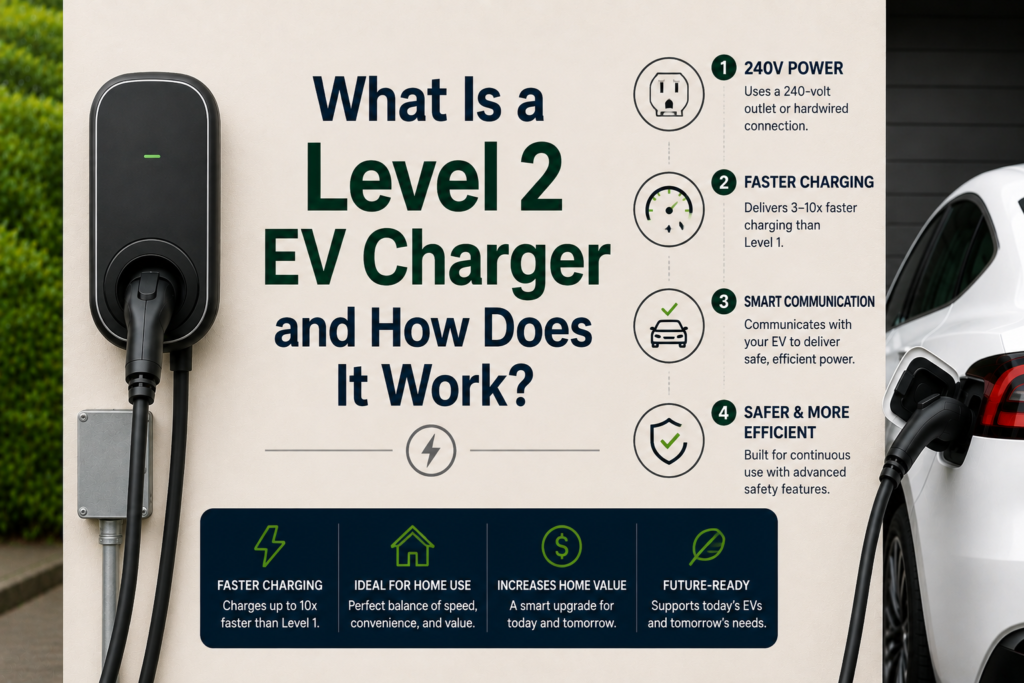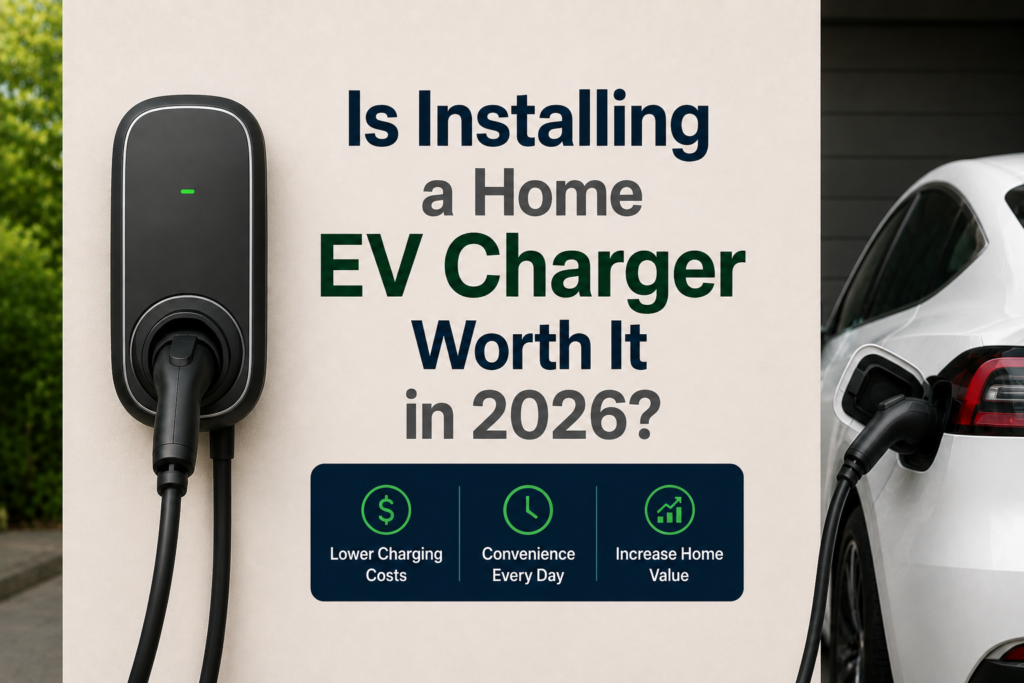
If you already own an EV or are about to buy one, you’ve likely done the math in your head: pay $600-$2,000+ upfront for a home charger and installation, or just keep using the outlet in your garage. In 2026, with charger prices more stable, incentive programs still active in many states, and a much larger used-EV market than a few years ago, the answer for most owners is clearer than it used to be. Here’s a straightforward breakdown to help you decide for your specific situation.
Quick Answer
For most EV owners who plan to keep the car for more than a year and drive more than a short daily commute, yes — a home Level 2 charger is worth it. The upfront cost is typically recovered through daily time savings, lower home-charging costs compared to public fast charging, and in many states, tax credits or utility rebates that offset a meaningful part of the installation. The exceptions are renters without long-term charger access, very low-mileage drivers, and anyone planning to sell the EV within the next several months.
The Case For Installing a Home Charger
1. You’ll almost never rely on public charging for daily use
With a Level 2 charger, most EVs fully recharge overnight. That means starting every day at or near 100%, without detours to a public charging station — which, especially with DC fast charging, costs significantly more per kWh than charging at home.
2. Home charging is meaningfully cheaper per mile
Residential electricity rates are, in most of the country, well below the price per kWh charged at public DC fast chargers. Over a year of typical driving, that cost difference alone can offset a large share of the installation cost — the exact savings depend on your local electricity rate and how much you’d otherwise rely on public fast charging.
3. Incentives can significantly reduce the net cost
As of 2026, many states and utility companies still offer rebates or tax credits specifically for home EV charger equipment and installation, sometimes stacking with each other. We track the current programs by state in our EV charger incentives series, since these change frequently and vary widely depending on where you live.
4. It protects and can increase home resale value
A properly installed Level 2 charger is increasingly viewed by buyers and real estate listings as a home amenity, similar to solar panels or a finished garage — particularly in states with high EV adoption.
5. Faster recovery when you need it most
Even for occasional situations — an unexpected same-day trip, hosting guests who also drive an EV, or simply forgetting to plug in the night before — Level 2 charging gives you a meaningful buffer that Level 1 charging often can’t.
The Case For Waiting (or Skipping It)
1. You rent, or you’re not staying long-term
If you don’t own your home, or you expect to move within the next year, the upfront installation cost is harder to justify unless your landlord is willing to share the cost or the charger is designed to be portable.
2. Your daily driving is very short
If you drive under roughly 20-25 miles a day and can reliably plug into a standard outlet overnight, Level 1 charging may genuinely cover your needs — see our full Level 1 vs Level 2 comparison to check your specific situation.
3. Your home’s electrical panel needs a costly upgrade
If a load calculation shows you need a full panel upgrade just to add the circuit, your total cost can climb toward $3,000-$5,000+, which changes the payback math meaningfully. It can still be worth it long-term, but it’s a bigger decision than a standard install.
4. You’re not sure you’ll keep the EV
If there’s a real chance you’ll switch back to a gas vehicle or sell the EV within months, it’s reasonable to rely on Level 1 or public charging in the meantime rather than committing to an installation.
A Simple Way to Frame the Decision
Rather than treating this as an all-or-nothing choice, think of it in three tiers:
- Low commitment: Use the included Level 1 cable for a few weeks while you gather real data on your charging habits.
- Moderate commitment: Install a lower-cost, lower-amperage Level 2 setup (16-24 amps) if your panel supports it without an upgrade — this covers most daily driving needs at a fraction of a full high-amperage installation.
- Full commitment: Install a higher-amperage charger (32-48 amps) with any needed panel work, ideal if you’re staying long-term, driving significant daily miles, or planning to add a second EV.
Key Takeaways
- For most EV owners planning to keep the car and stay in their home, a home charger typically pays for itself through time savings, cheaper home charging costs, and available incentives.
- Renters, very low-mileage drivers, and short-term EV owners are the main groups where waiting can make sense.
- A phased approach — starting with Level 1, then upgrading — is a low-risk way to gather real usage data before committing to a larger installation.
- State and utility incentives can meaningfully change the math in your favor, so it’s worth checking what’s currently available before deciding.
Frequently Asked Questions
How long does it typically take for a home charger to pay for itself? It depends heavily on your driving habits, local electricity rates, and how much you’d otherwise spend on public fast charging, but many owners who drive an average U.S. commute see the investment offset within one to a few years through charging cost savings alone, before even factoring in incentives.
Does installing a home charger affect my home insurance? In most cases, no significant change, though it’s worth a quick call to your insurer to confirm, especially for higher-amperage installations that involve panel upgrades.
Is it worth installing a charger if I’m leasing my EV? Often yes, if you plan to keep leasing an EV afterward — a plug-in or portable Level 2 charger can move with you to your next vehicle, unlike a hardwired unit tied to your home.