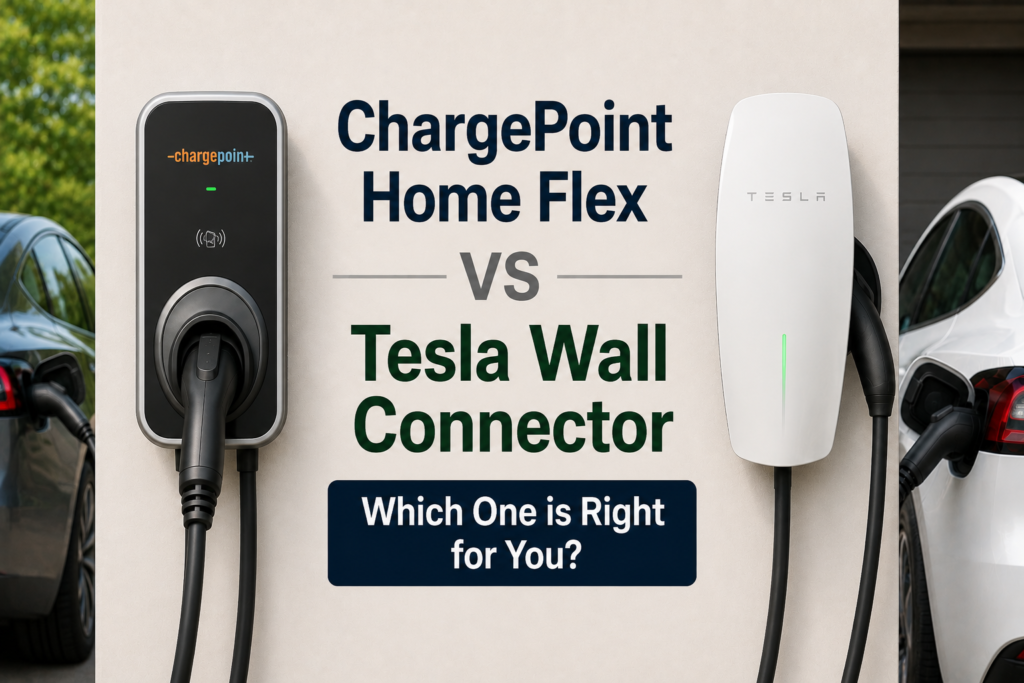
JuiceBox and ChargePoint are two of the longest-running names in home EV charging, and both are well known for solid smart-charger experiences. They’re closer in price and features than some other match-ups on this site, which makes the decision come down to a handful of specific differences rather than one obvious winner. Here’s the full breakdown.
Quick Answer
Both are excellent, similarly priced smart chargers. ChargePoint Home Flex has the edge in flexibility (adjustable amperage range, plug-in or hardwired options) and brand longevity in the public charging network space. JuiceBox has a strong reputation for a clean, simple app experience and is often praised for straightforward setup. For most buyers, the decision comes down to app preference and minor feature differences rather than a clear performance gap.
Side-by-Side Comparison
| JuiceBox 40 | ChargePoint Home Flex | |
|---|---|---|
| Price (approx.) | $400 – $550 | $500 – $650 |
| Max amperage | Up to 40A | Up to 50A (adjustable) |
| Connector type | J1772 | J1772 |
| Installation type | Hardwired or plug-in (NEMA 6-50/14-50) | Hardwired or plug-in (NEMA 6-50/14-50) |
| Cable length | 25 ft | 23 ft |
| WiFi / app control | Yes | Yes |
| Energy monitoring | Yes | Yes |
| Amperage adjustability | Fixed at purchase (per model) | Software-adjustable in-app |
| Outdoor rated | Yes | Yes |
| Public network account | Not required | ChargePoint account links home + public charging |
Amperage and Charging Speed
ChargePoint Home Flex has a wider adjustable amperage range (up to 50A), meaning a single unit can be configured for lower amperage now and adjusted later in the app if your needs change — useful if you’re not sure exactly what your panel can support at installation time, or if you upgrade vehicles later.
JuiceBox chargers are typically sold in fixed amperage models (the JuiceBox 40 being the most popular at 40A), so you choose your amperage at time of purchase based on your panel capacity and vehicle needs — see our guide on how many amps you need for a home EV charger if you haven’t settled on a number yet.
App Experience
Both brands have invested heavily in their apps, but they’re built with slightly different philosophies:
- JuiceBox’s app (Enel X Way) is generally praised for a clean, simple interface focused on scheduling and energy cost tracking, with less emphasis on connecting to a larger public network.
- ChargePoint’s app ties your home charger into the same account used for the ChargePoint public charging network — one of the largest in the U.S. — which is a real convenience if you already use ChargePoint stations regularly, but less relevant if you don’t.
Neither app requires a subscription for basic home charging functionality, though both offer optional account-based features tied to their respective ecosystems.
Installation Flexibility
Both chargers support hardwired and plug-in installation using the same common outlet types (NEMA 6-50 or 14-50), so neither has an advantage in this category. Your installation cost will depend more on your home’s electrical setup than on which of these two brands you choose — covered in detail in our hardwired vs. plug-in EV charger guide.
Reliability and Track Record
Both brands have been in the home charging market for many years and have large installed bases, which generally translates into more refined hardware and fewer early-generation issues compared to newer entrants. ChargePoint additionally benefits from its scale as a public charging network operator, which some buyers see as a sign of longer-term company stability and continued software support.
Price Comparison
ChargePoint Home Flex typically costs somewhat more than JuiceBox, largely reflecting its wider adjustable amperage range and public network integration. For buyers who don’t need or want the ChargePoint ecosystem, JuiceBox often delivers very similar core functionality — reliable Level 2 charging with solid app control — at a lower price point.
Which One Should You Buy?
Choose ChargePoint Home Flex if:
- You want the flexibility to adjust amperage in-app rather than committing to a fixed rating at purchase
- You already use, or plan to use, the ChargePoint public charging network
- You want the widest possible amperage range from a single unit (up to 50A)
Choose JuiceBox if:
- You’ve already determined the exact amperage you need and don’t need in-app adjustability
- You prefer a simpler app experience without a tie-in to a public charging network
- You want to save some money over ChargePoint while still getting solid smart-charger features
Key Takeaways
- JuiceBox and ChargePoint are closely matched smart chargers, both well-reviewed and widely installed.
- ChargePoint offers wider adjustable amperage and public-network integration; JuiceBox offers a simpler app experience often at a lower price.
- Both support the same installation types and connector standard (J1772), so compatibility isn’t a differentiating factor between them.
- The right pick often comes down to whether you value ChargePoint’s public network ties or JuiceBox’s more focused, standalone app experience.
Frequently Asked Questions
Is JuiceBox compatible with Tesla vehicles? Yes, using the J1772-to-Tesla adapter that Tesla includes with every new vehicle.
Can I change the amperage on a JuiceBox after installation? Generally no — JuiceBox units are typically fixed at the amperage of the specific model purchased, unlike ChargePoint’s software-adjustable range, so it’s worth confirming your ideal amperage before buying.
Do I need a ChargePoint account to use the Home Flex charger? No, a full account isn’t required for basic home charging, though creating one unlocks app features and, if you use them, access to the public ChargePoint network under the same login.