Introduction
As electric vehicles (EVs) become mainstream, a frequent question for prospective and current owners is: how much does it cost to charge an EV at home? The answer depends on a few variables — battery size, vehicle efficiency, and your state’s electricity rate. This guide explains how home EV charging costs are calculated, provides examples of cost per charge by state, and offers practical tips to lower your charging bill.
How home EV charging costs are calculated
At its simplest, the cost to charge an EV at home equals the energy consumed (in kilowatt-hours, kWh) multiplied by your residential electricity rate (cost per kWh). Charging level (Level 1 vs Level 2) affects speed and slightly affects losses, but energy cost is driven by kWh used.
Basic formula
Cost = kWh used × electricity rate ($/kWh)
Example variables you’ll need:
- Battery capacity (e.g., 60 kWh)
- State residential electricity rate (e.g., $0.16 per kWh)
- Charging delta (how much of the battery you replenish — full charge vs partial)
- Vehicle efficiency (miles per kWh) and charging losses (usually 5–10%)
Practical examples: cost per full charge and per commute
Using a common example, a 60 kWh battery charged from near empty to full at the national average residential rate (~$0.16/kWh) costs approximately:
- Full charge: 60 kWh × $0.16 = $9.60
- Cost per mile (assuming 3.5 miles/kWh): 1/3.5 kWh/mile × $0.16 ≈ $0.046 per mile (4.6¢/mile)
For a typical 40-mile daily round trip and the same efficiency, energy needed ≈ 11.4 kWh, costing about 11.4 × $0.16 = $1.82 per day.
Cost per charge by state (sample estimates)
Electricity rates vary widely across the U.S. Below are representative residential rates and the estimated cost to fully charge a 60 kWh battery (rounded). These are approximate and meant to show relative differences by state.
- Louisiana: $0.11/kWh → full charge ≈ $6.60
- Idaho: $0.11/kWh → full charge ≈ $6.60
- Washington: $0.12/kWh → full charge ≈ $7.20
- Texas: $0.13/kWh → full charge ≈ $7.80
- Arizona: $0.13/kWh → full charge ≈ $7.80
- Oregon: $0.13/kWh → full charge ≈ $7.80
- Florida: $0.14/kWh → full charge ≈ $8.40
- Illinois: $0.15/kWh → full charge ≈ $9.00
- U.S. average: $0.16/kWh → full charge ≈ $9.60
- New Jersey: $0.17/kWh → full charge ≈ $10.20
- New York: $0.20/kWh → full charge ≈ $12.00
- Massachusetts: $0.24/kWh → full charge ≈ $14.40
- California: $0.28/kWh → full charge ≈ $16.80
- Hawaii: $0.33/kWh → full charge ≈ $19.80
These estimates are for a full 60 kWh charge. If you typically charge from 20% to 80% (a common recommended practice), you’d only add 36 kWh — multiply the kWh by your state rate to get the partial-charge cost.
Factors that change your actual cost
- Time-of-Use (TOU) rates: Charging overnight can be much cheaper under TOU plans. If your utility offers off-peak pricing, schedule charging during that window.
- Charging efficiency: Losses during charge/discharge (5–10%) increase energy consumed beyond the ideal kWh added to the battery.
- Battery size and driving habits: Frequent long trips, higher speeds, cold weather, or heavy loads reduce efficiency and raise per-mile costs.
- Local fees and taxes: Some utilities include fixed charges or special service fees that affect effective cost per kWh.
- Public charging vs home: Home charging is usually the least expensive option. Fast DC public chargers often charge much higher rates per kWh or per minute.
Tips to reduce home EV charging costs
- Sign up for a Time-of-Use plan and schedule charging at night.
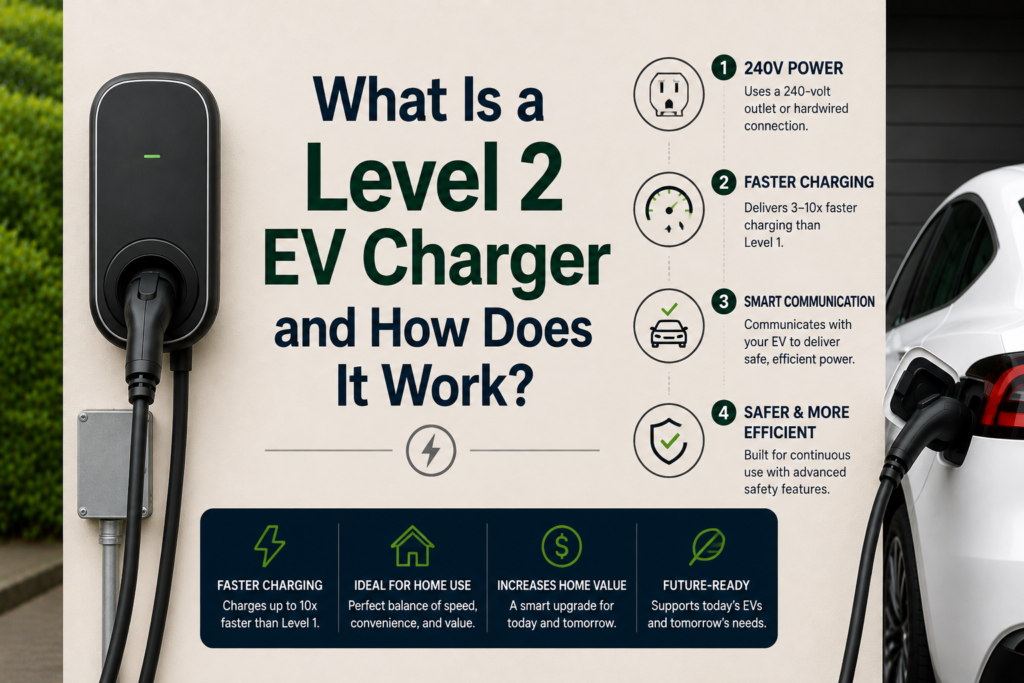
- Use a Level 2 charger to reduce charging time if you need it, but know the energy cost per kWh stays the same.
- Insulate and garage the vehicle when possible to reduce cold-weather efficiency penalties.
- Install solar panels or a home battery to offset grid charging and lock in lower long-term energy costs.
- Monitor your vehicle’s kWh consumption via the car’s app to understand real-world efficiency.
Worked Example: Monthly Home Charging Cost
Assume you drive 1,000 miles a month in an EV that averages 3.5 miles per kWh, and about 10% of energy is lost while charging. The car needs 1,000 ÷ 3.5 = 285.7 kWh, so you draw 285.7 ÷ 0.90 = 317.5 kWh from the wall.
| Electricity rate | Monthly cost | Cost per 100 miles | Cost per full 60 kWh charge* |
|---|---|---|---|
| 12¢/kWh (low-cost state) | $38.10 | $3.81 | $8.00 |
| 18¢/kWh (near the U.S. average) | $57.14 | $5.71 | $12.00 |
| 30¢/kWh (high-cost state) | $95.24 | $9.52 | $20.00 |
*60 kWh ÷ 0.90 = 66.7 kWh from the wall. For comparison, a 30-mpg gas car covering the same 1,000 miles at an illustrative $3.20 per gallon uses 33.3 gallons, or about $106.67. The U.S. EIA puts the average residential electricity price at about 17.3¢/kWh in 2025, forecast near 18¢ for 2026 — but your own bill and rate plan are what count.
Figures in this example are illustrative and rounded; your rates, vehicle and driving will differ.
Sources and Further Reading
- U.S. EIA — Short-Term Energy Outlook: Electricity (residential prices)
- U.S. DOE Alternative Fuels Data Center — Charging Plug-In Electric Vehicles at Home
- ENERGY STAR — Certified Electric Vehicle Chargers
Last reviewed: October 2026.
Conclusion
In most of the U.S., charging an EV at home is inexpensive compared with gasoline. A full charge of a typical 60 kWh EV often costs between about $6 and $20 depending on state electricity rates. The best way to estimate your personal cost is to calculate how many kWh you use per day or per week and multiply that by your residential rate, while accounting for charging losses and TOU pricing.
Understanding these variables helps you plan fueling costs, compare EV ownership against gasoline vehicles, and take advantage of cheaper charging opportunities like off-peak electricity or home solar. To estimate your own monthly cost, enter your state and daily mileage in our free EV Charging Cost Calculator.