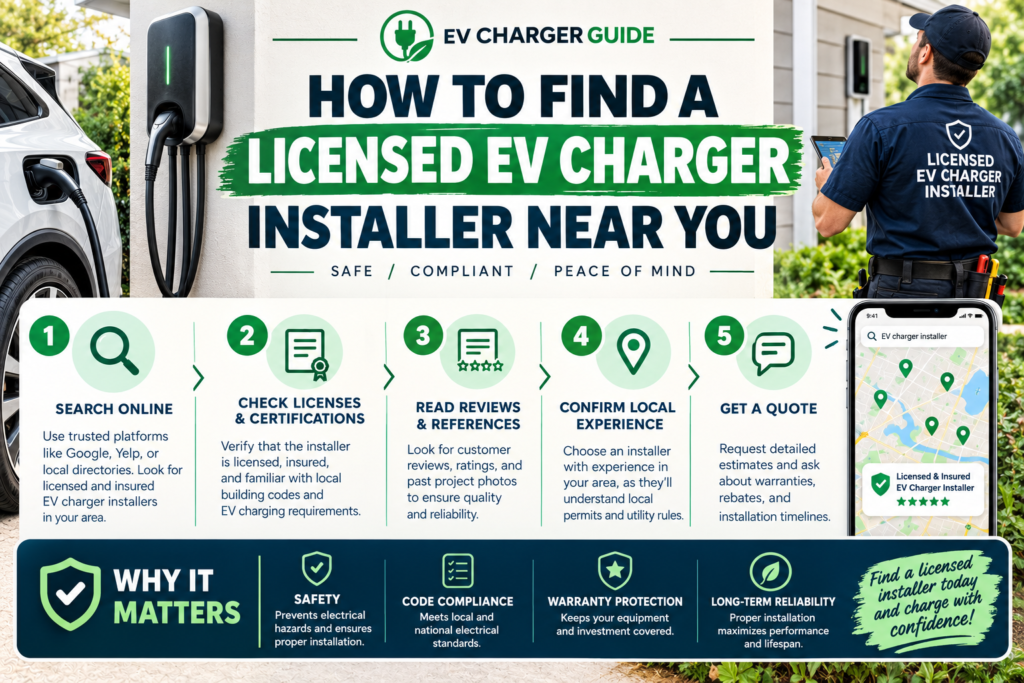
It’s tempting to treat a permit as unnecessary paperwork, especially when your electrician says the installation is straightforward. But for home EV chargers, a permit isn’t a formality — it’s a legal requirement in nearly every U.S. jurisdiction, and skipping it can create real problems down the road. Here’s what you need to know.
Quick Answer
Yes, in the vast majority of U.S. municipalities, installing a Level 2 EV charger requires an electrical permit, because it involves adding a new dedicated high-amperage circuit to your home’s electrical system. A licensed electrician typically handles the permit application as part of the installation process, though requirements and costs vary by city and county.
Why Permits Are Required for EV Chargers Specifically
A Level 2 charger circuit isn’t a minor electrical addition — it’s one of the largest continuous electrical loads most homes will ever have installed, often drawing 30-60 amps for hours at a time. Because of this, most jurisdictions classify it the same way as other major electrical work, such as adding a new subpanel or wiring a large appliance circuit, which triggers standard permit and inspection requirements under the National Electrical Code (NEC) and local amendments.
The permit process exists to confirm:
- The circuit is sized correctly for the load
- The wiring, breaker, and any panel work meet current code
- The installation is safe for continuous, high-amperage use
- The work is documented for future reference (important for resale and insurance)
What the Permit Process Typically Involves
- Application submission — your electrician (or you, in some owner-permitted jurisdictions) submits an application to the local building or electrical department, often including a basic diagram of the planned circuit.
- Permit approval — most residential EV charger permits are approved quickly, often within days, since this has become a routine, well-understood type of electrical work in most areas.
- Installation — the electrician completes the work according to the approved permit.
- Inspection — a local electrical inspector visits to confirm the work meets code before it’s signed off as complete.
- Final approval — the permit is closed out, and you have official documentation of a code-compliant installation.
What Permits Typically Cost
Permit fees vary significantly by municipality, generally ranging from $50 to $300, sometimes bundled into your electrician’s overall quote rather than billed separately. Some areas charge flat fees for standard residential electrical permits, while others calculate fees based on the value or scope of the work.
What Happens If You Skip the Permit
Skipping a required permit might seem like a way to save time or money, but it creates real risks:
- Insurance complications — if unpermitted electrical work is later linked to a fire or other damage, your homeowner’s insurance claim could be denied or reduced.
- Resale problems — unpermitted electrical work often surfaces during a home inspection when you sell, potentially requiring costly retroactive permitting or even removal of the work.
- Code violations and fines — if discovered by your municipality, unpermitted work can result in fines and a requirement to bring the installation up to code retroactively, sometimes involving opening up walls that were already closed.
- Safety risk — the inspection step exists specifically to catch wiring or installation mistakes before they become a fire hazard; skipping it removes that safety check entirely.
Are There Any Exceptions?
A small number of very minor situations may not require a full permit — for example, simply plugging a portable Level 2 charger into an already-existing, properly rated 240V outlet with no new wiring involved. However, any installation that involves:
- Adding a new circuit or outlet
- Modifying your electrical panel
- Running new wiring
…will almost certainly require a permit. When in doubt, ask your electrician directly, since they’ll know your specific local requirements and can confirm whether your exact situation qualifies for any exception.
Do I Need to Pull the Permit Myself?
In most cases, no — your licensed electrician typically handles the permit application and inspection scheduling as a standard part of the installation service, and this is usually reflected in their quote. Some jurisdictions allow homeowners to pull their own permits for work they perform themselves, but since EV charger installation should be done by a licensed electrician regardless, this is rarely a relevant option in practice.
Worked Example: What a Permit Costs vs What It Protects
Permit fees are usually a small slice of the job. On an illustrative $1,500 installation:
| Item | Amount | Share of total |
|---|---|---|
| Charger and materials | $800 | 53% |
| Electrician labor | $550 | 37% |
| Permit and inspection | $150 | 10% |
| Total | $1,500 | 100% |
Against that $150, a permit is often required to claim utility rebates (frequently $250–$500), gives you an inspector’s check that a 40 A charger is on a 50 A circuit with correctly sized wire, and avoids questions from your insurer or a future buyer’s home inspector.
Figures in this example are illustrative and rounded; your rates, vehicle and installation will differ.
Sources and Further Reading
- U.S. DOE Alternative Fuels Data Center — Charging Plug-In Electric Vehicles at Home (covers permits and NEC Article 625)
- NFPA 70, National Electrical Code (Article 625 covers EV charging equipment)
- U.S. DOE AFDC — State Laws and Incentives
Last reviewed: October 2026.
Key Takeaways
- Almost all home EV charger installations legally require an electrical permit due to the size of the electrical load involved.
- Your electrician typically handles the permit application and inspection as part of a standard installation.
- Permit fees generally range from $50-$300, depending on your municipality.
- Skipping a required permit creates real risks for insurance claims, home resale, and safety — it’s not worth avoiding to save a modest fee.
Frequently Asked Questions
How long does the permit and inspection process typically take? Many residential EV charger permits are approved within a few days, and the final inspection is often scheduled within one to two weeks of completing the installation, though timelines vary by local permitting office workload.
Will a permit delay my installation significantly? Usually not significantly — most electricians build permit timing into their standard scheduling, and many areas have streamlined this specific type of permit given how common EV charger installations have become.
Can I check if a previous EV charger installation in a home I’m buying was properly permitted? Yes — most municipalities maintain public permit records that can be checked by address, which is a good step to take if you’re buying a home with an existing EV charger already installed.