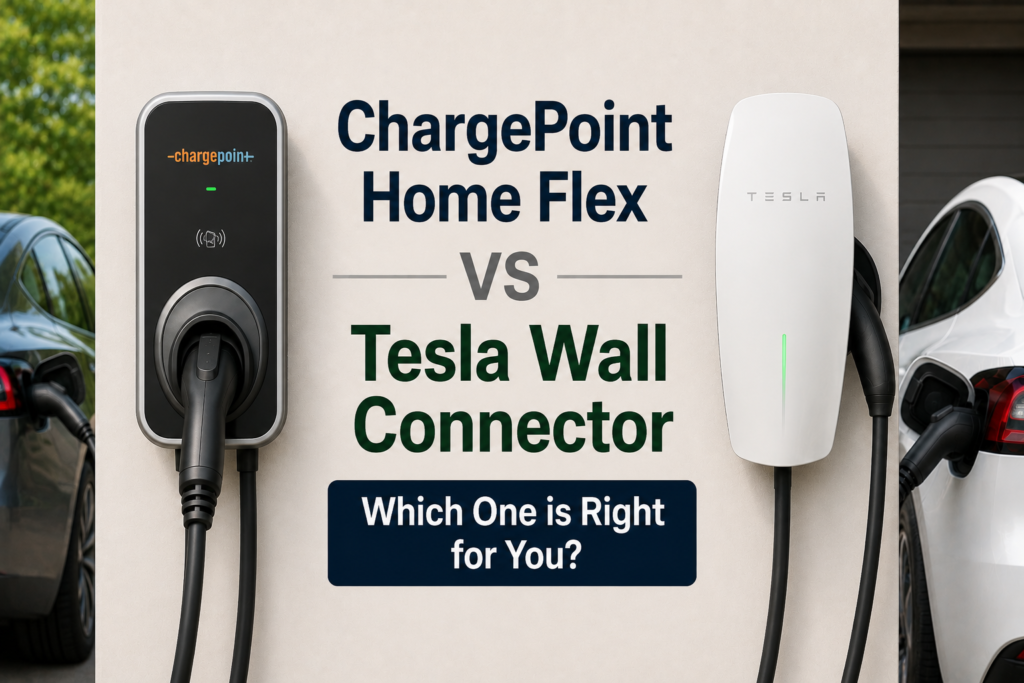
Nearly every charger comparison on this site involves a WiFi-connected “smart” model, but plenty of solid basic chargers exist too — often for noticeably less money. Before you pay extra for app control and connectivity, it’s worth understanding exactly what that premium buys you, and whether you’d actually use it.
Quick Answer
A WiFi-enabled charger is worth the extra cost if you want scheduling for off-peak electricity rates, remote monitoring, or usage/cost tracking — features that can pay for themselves over time in some utility rate structures. A basic non-connected charger is a perfectly reliable choice if you simply plug in at the same time every day and don’t care about tracking data or remote control, and it typically costs less upfront with one less potential point of failure.
What “Smart” Actually Means in an EV Charger
A WiFi-enabled charger connects to your home network and a companion app, typically adding:
- Charging schedules — automatically start/stop charging during specific hours, often used to align with off-peak utility rates
- Remote start/stop — begin or pause a charging session from your phone
- Energy usage tracking — see kWh used per session, and sometimes estimated cost
- Firmware updates — bug fixes and new features delivered over the air
- Notifications — alerts when charging starts, completes, or is interrupted
A basic charger skips all of this. You plug in, it charges at its configured amperage, and that’s the entire interaction — amperage is typically set once via internal dip switches at installation and not adjusted regularly afterward.
Where the Price Difference Actually Goes
WiFi-enabled chargers typically cost $100-$250 more than comparable basic models from the same amperage class. That premium covers the WiFi radio, the app development and hosting behind it, and often a slightly more refined enclosure and display. The core charging hardware — the part that actually delivers power safely to your car — isn’t meaningfully different in quality between smart and basic chargers from reputable brands.
When Scheduling Can Actually Save You Money
This is the single biggest practical reason to choose a smart charger: time-of-use electricity rates. Many U.S. utility companies charge significantly less per kWh during off-peak hours (commonly overnight), and some offer specific EV charging rate plans that require or reward off-peak charging.
If your utility offers time-of-use or EV-specific rates, a scheduling-capable charger lets you consistently charge during the cheapest hours without having to remember to plug in at a specific time each night. Depending on the rate difference in your area, this can add up to meaningful savings over a year — worth checking against your specific utility’s rate plans before deciding.
If your utility charges a flat rate regardless of time of day, this particular benefit disappears, and the case for a smart charger becomes purely about convenience and monitoring rather than cost savings.
When a Basic Charger Makes More Sense
- You have a flat electricity rate with no time-of-use pricing, removing the main financial incentive for scheduling
- You reliably plug in at roughly the same time every day and don’t need reminders or remote control
- You’d rather minimize potential points of failure — fewer electronic components generally means fewer things that can require troubleshooting or firmware updates
- You’re prioritizing the lowest possible upfront cost, such as for a rental property or secondary vehicle setup
Reliability Considerations
It’s worth addressing directly: a WiFi connection failing doesn’t stop your charger from actually charging your car in almost all well-designed units — it simply disables the app features until connectivity is restored. That said, some owners specifically prefer basic chargers for the peace of mind of having one less system (home WiFi, router, app servers) in the chain between “plug in” and “car charges.”
Key Takeaways
- Smart WiFi chargers add scheduling, remote control, and usage tracking for a $100-$250 premium over basic models.
- The clearest financial case for a smart charger is access to off-peak or time-of-use electricity rates through your utility.
- Basic chargers are a perfectly reliable, lower-cost option if you don’t need scheduling or app-based monitoring.
- Charging performance and safety are not meaningfully different between smart and basic chargers from reputable brands — the difference is entirely in connected features.
Frequently Asked Questions
Will a basic charger still work if my home WiFi goes down? Yes — basic chargers have no WiFi dependency at all, and they’ll charge your vehicle exactly the same regardless of your internet connection.
Can I check if my utility offers time-of-use rates before buying a charger? Yes, this information is available directly from your utility company’s website or billing statements, and it’s worth checking before deciding whether the smart-charger premium will pay for itself.
Do smart chargers require a monthly subscription? Most major brands do not charge a subscription fee for core home charging features like scheduling and monitoring — check the specific model you’re considering, since this can vary.