A Level 2 home charger is built to handle years of daily use with very little attention, but a small amount of routine maintenance goes a long way toward avoiding problems and extending its lifespan. Here’s everything worth doing, and how often.
Quick Answer
Home EV charger maintenance mostly comes down to periodic visual inspection, keeping the connector and cable clean, protecting the unit from extreme weather where relevant, and keeping firmware updated on smart models. Most of this takes only a few minutes every few months — there’s no complex maintenance schedule required for normal residential use.
Monthly Checks (Quick and Easy)
- Inspect the charging cable for cracks, fraying, or exposed wiring, especially near the connector and where the cable meets the wall unit.
- Check the connector/plug for dirt, debris, or corrosion, particularly if your charger is installed outdoors.
- Confirm the unit powers on normally and begins charging without unusual delay, error codes, or noise.
- Wipe down the housing with a dry or slightly damp cloth to remove dust and debris, avoiding harsh chemicals or solvents.
Seasonal and Periodic Maintenance
Before Winter
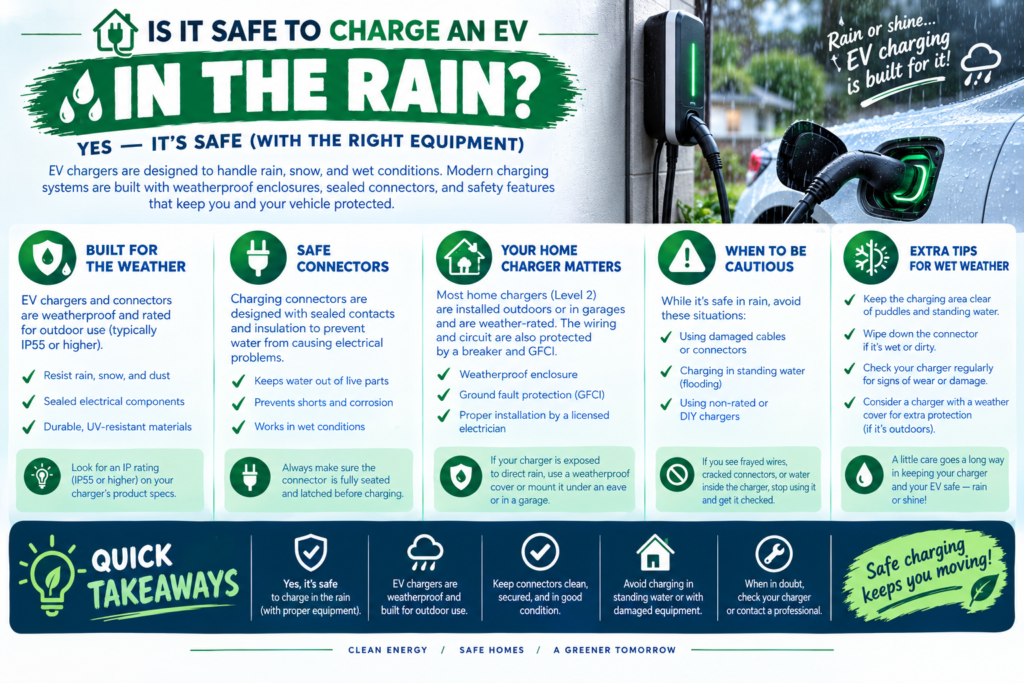
- Check that any weatherproof cover (for outdoor installations) is intact and properly sealing the unit and connector when not in use.
- Confirm the charger’s cold-weather operating range in its manual, since extreme cold can affect both charging speed and, in rare cases, unit function.
- Clear away any accumulated leaves, dirt, or debris around the base of a pedestal-mounted unit.
Before Summer
- Check for adequate airflow around the unit if it’s installed in an enclosed space, since chargers generate some heat during operation and rely on proper ventilation.
- Inspect for any pest activity (insects, rodents) that may have nested near or in outdoor equipment during warmer months.
Annually
- Update firmware on smart/WiFi-connected chargers if updates aren’t applied automatically — check your charger’s app for available updates.
- Test GFCI protection, if your installation includes a dedicated GFCI breaker or outlet, following your electrician’s or manufacturer’s testing instructions.
- Review your charging habits and settings in the app, since utility rate plans and your own driving patterns can change over time in ways that make your current schedule less optimal — see our WiFi-enabled vs. basic chargers comparison for more on how scheduling can save money.
Cable Care Best Practices
The charging cable is the component most exposed to daily wear:
- Avoid letting the cable drag on the ground repeatedly, which accelerates wear on the outer jacket.
- Use the charger’s built-in cable holder or wrap the cable loosely rather than tightly coiling it, which can stress the internal wiring over time.
- Don’t run the cable over sharp edges, under vehicle tires, or through areas where it could be crushed by a car door or trunk.
- If you notice any exposed wiring or damage, stop using the charger immediately and contact the manufacturer or a licensed electrician — don’t attempt to repair a damaged charging cable yourself.
When to Call an Electrician (Not a DIY Fix)
Certain issues go beyond routine maintenance and warrant a professional:
- Repeated breaker trips when charging, which can indicate a circuit or charger issue rather than a one-time fluke
- Visible damage to wiring, the outlet, or the panel connection
- Unusual heat, buzzing, or burning smell from the charger, outlet, or panel during charging — stop using the charger immediately if this occurs
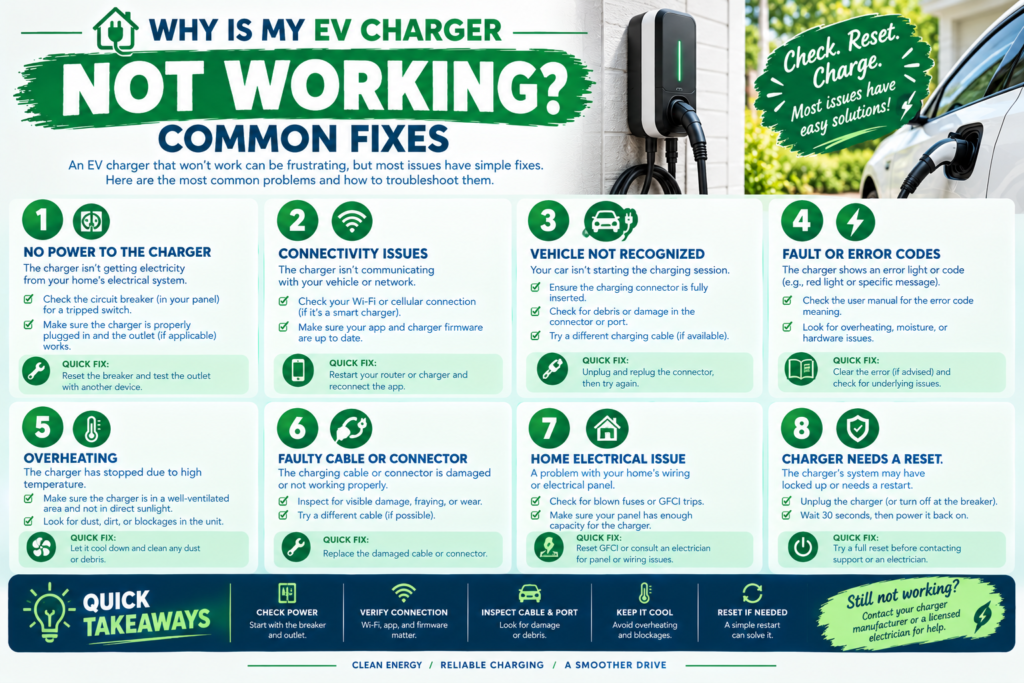
- Persistent error codes that aren’t resolved by basic troubleshooting from the manufacturer’s app or manual
See our guide on why your EV charger might not be charging correctly for common issues and their likely causes before assuming a repair is needed.
Outdoor Installation-Specific Maintenance
If your charger is mounted outdoors, a few extra considerations apply:
- Confirm the weatherproof in-use cover closes and seals properly every time the charger isn’t actively in use.
- Periodically check for water intrusion signs around the mounting point and conduit entry.
- In coastal or high-humidity climates, inspect more frequently for corrosion on any exposed metal components.
Does a Home EV Charger Need Professional Servicing?
In most cases, no — Level 2 home chargers are designed as largely maintenance-free consumer electronics once properly installed, and there’s no routine professional service interval like there might be for HVAC equipment. The main exceptions are the electrician-level issues listed above (breaker trips, wiring damage, persistent errors), which should prompt a service call rather than being something to schedule preventively.
Key Takeaways
- Routine maintenance is minimal: monthly visual checks, cable care, and periodic firmware updates cover most of what’s needed.
- Pay particular attention to the charging cable, since it experiences the most daily physical wear.
- Repeated breaker trips, visible wiring damage, or unusual heat/smell during charging warrant an electrician, not a DIY fix.
- Outdoor installations need slightly more attention to weatherproofing and corrosion, particularly in humid or coastal climates.
Frequently Asked Questions
How often should I update my charger’s firmware? Check for updates every few months if they aren’t applied automatically through your charger’s app — firmware updates often include both new features and important safety or reliability fixes.
Can I pressure wash or hose down an outdoor charger to clean it? No — even outdoor-rated chargers aren’t designed for direct high-pressure water exposure. Use a damp cloth for cleaning and rely on the unit’s weatherproof rating for normal rain exposure instead.
Does regular maintenance extend my charger’s warranty? Not directly — warranties are typically based on manufacturing defects rather than maintenance records, but following basic care recommendations does reduce the likelihood of issues that could otherwise be misattributed to a defect versus misuse.