It looks like it shouldn’t be safe — plugging a high-voltage connector into your car while it’s pouring rain — but EV charging is specifically engineered to handle exactly this situation. Here’s why it’s safe, how the engineering works, and the few real precautions worth knowing.
Quick Answer
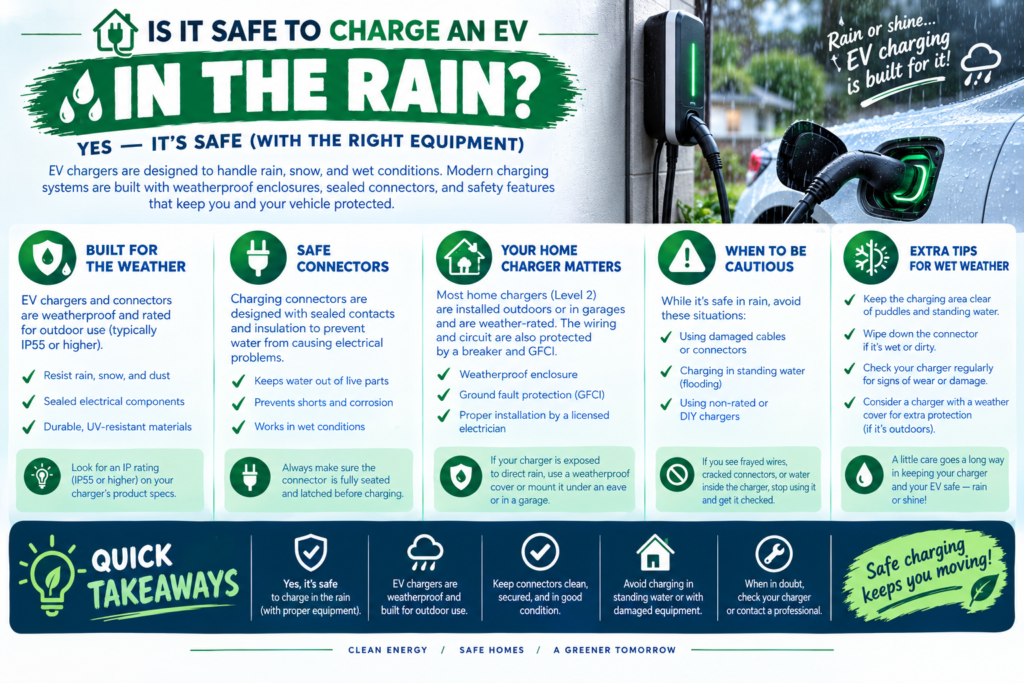
Yes, it’s safe to charge an EV in the rain, including with a Level 2 home charger, as long as the equipment is properly rated and installed. EV charging connectors and vehicle charging ports are specifically designed and tested for outdoor use in wet conditions, including active rain. The real safety considerations are less about rain itself and more about using outdoor-rated equipment correctly and avoiding a small number of specific hazards covered below.
Why EV Charging Connectors Are Designed for Wet Conditions
EV charging connectors (both the vehicle’s charging port and the charger’s plug) use a sealed design with the electrical contacts recessed and protected, and they’re built to meet specific ingress protection (IP) ratings that indicate resistance to dust and water. This isn’t a workaround or a lucky coincidence — EV charging standards were developed with the expectation that vehicles would routinely charge outdoors in all weather, since most EVs park outside at least some of the time.
Additionally, unlike a standard household outlet, the charging connection only becomes electrically “live” after the vehicle and charger have completed a communication handshake confirming a secure connection — a safety design specifically intended to prevent exposed live contacts during the plugging-in process.
What Actually Matters for Safe Rain Charging
1. Use Properly Rated Equipment
Your charger and any outdoor outlet should carry an appropriate weatherproof rating (commonly IP54 or higher for outdoor charging equipment) and, for outdoor outlets specifically, an in-use weatherproof cover that protects the connection point even while a cord is plugged in. This is a standard part of any correctly installed outdoor charging setup — see our guide on 240V outlets for EV chargers for more on outdoor outlet requirements.
2. Ground Fault Protection (GFCI)
Outdoor EV charging circuits typically include GFCI protection, which is designed specifically to cut power quickly if it detects any abnormal current flow, such as could occur from water intrusion into damaged equipment. This is a standard code requirement for outdoor electrical installations, not an optional upgrade.
3. Inspect Equipment Periodically
Routine visual inspection of the cable and connector for cracks, damage, or wear is worth doing periodically, since damaged equipment is the actual risk factor — not rain itself hitting intact, properly rated equipment. See our guide on how to maintain your home EV charger for a full maintenance checklist.
What You Shouldn’t Do, Even Though Charging in Rain Is Generally Safe
- Don’t use a charger or outlet that isn’t rated for outdoor use in a location exposed to rain — an indoor-rated unit installed outdoors is a genuine hazard, unlike a properly outdoor-rated one.
- Don’t charge with visibly damaged equipment — a cracked cable, exposed wiring, or a connector that doesn’t fully seal is a real risk regardless of weather, and becomes more concerning in wet conditions.
- Don’t ignore standing water pooling directly around the charger’s base or electrical connections, which can indicate a drainage or installation issue worth having checked, even if the equipment itself continues to function normally.
- Don’t leave an outdoor outlet’s weatherproof cover open or broken when not actively charging, since this defeats the purpose of the outdoor rating.
What About Flooding, Not Just Rain?
Standard rain exposure is different from flooding or standing water actually submerging or significantly contacting the charger, outlet, or vehicle’s charging port. If your charging area has experienced flooding:
- Don’t attempt to charge until the equipment has been inspected by a licensed electrician
- Visually check for any water residue, corrosion, or debris in or around the connector and outlet
- Treat this as a “call an electrician” situation rather than routine rain exposure, covered further in our guide on why your EV charger might not be charging correctly
Does Rain Affect Charging Speed?
No — rain itself has no effect on your charging speed or the amount of power delivered to your vehicle. Charging speed depends on your charger’s amperage and your vehicle’s onboard charging capacity, not weather conditions, aside from more extreme temperature effects covered in our guide on how long it takes to charge an EV at home.
Key Takeaways
- Charging an EV in the rain is safe with properly rated, correctly installed equipment — this is a standard, expected use case in EV charging design, not an edge case.
- The real safety factors are using outdoor-rated equipment, having GFCI protection, and avoiding visibly damaged components — not rain exposure itself.
- Flooding or standing water directly affecting the charger or outlet is different from normal rain and warrants an electrician inspection before continued use.
- Rain has no effect on charging speed or performance with properly functioning equipment.
Frequently Asked Questions
Can I get shocked if I touch the connector while it’s raining? No, as long as the equipment is undamaged and properly rated — the connector’s electrical contacts only become live after a secure connection is confirmed, and the overall design accounts for routine wet-weather use.
Do I need a special “rain-proof” charger, or does a standard charger work? Any charger rated for outdoor installation (check the manufacturer’s IP rating and installation instructions) is designed to handle normal rain exposure — there’s no separate “rain-specific” charger category needed beyond standard outdoor-rated equipment.
Should I cover my charger with a tarp or umbrella during heavy rain just to be extra safe? This isn’t necessary for properly rated, undamaged outdoor equipment, and improvised coverings can sometimes create their own issues (trapped moisture, reduced ventilation). Rely on the equipment’s built-in weatherproof design instead.