Introduction
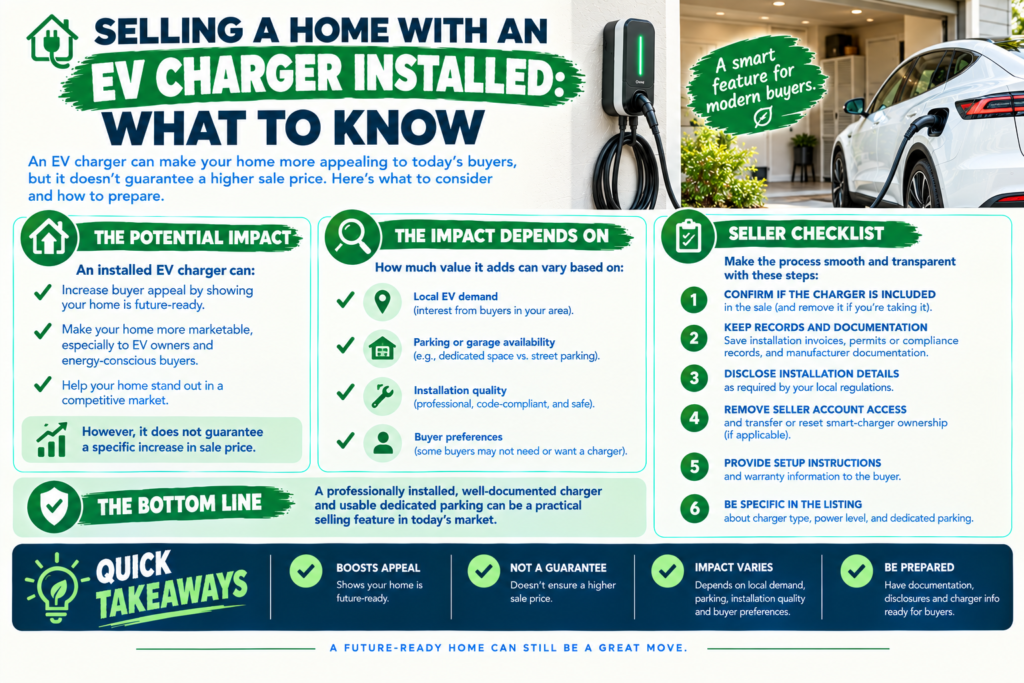
Selling a home with an electric vehicle (EV) charger installed can be a competitive advantage in today’s market, but it also introduces unique considerations for homeowners and agents. From disclosure and documentation to appraisal and marketing strategies, understanding how an EV charger affects the sale process helps you avoid surprises and maximize value. This guide covers what to know before listing a property with an EV charger so you can present the installation clearly and confidently.
Why an EV Charger Matters to Buyers
EV ownership is growing rapidly, and many buyers now prioritize homes that are EV-ready or already equipped with a charger. An installed charger signals convenience and forward-thinking infrastructure, particularly in markets with high EV adoption. However, not all chargers are equal—buyers, inspectors, and appraisers care about charger type, installation quality, and electrical capacity.
Key buyer priorities
- Reliability and safety: Properly installed chargers backed by permits and certifications.
- Charging speed: Level 2 chargers (240V) are generally preferred over slower Level 1 units.
- Ownership and transferability: Whether the charger is owned, leased, or under a separate agreement.
- Location and convenience: Placement of the charger relative to parking and home access.
Legal and Disclosure Considerations
Full disclosure is essential when selling a home with an EV charger. Depending on local laws and your mortgage or insurance agreements, failing to disclose modifications to electrical systems can create legal and financial risks.
Disclosure checklist
- Provide copies of permits and inspection reports related to the charger and any electrical upgrades.
- Disclose whether the charger is owned outright, financed, or leased under a long-term agreement.
- Inform the buyer about any claims or known issues—such as tripped breakers, past repairs, or manufacturer warranty limitations.
- Check homeowner association (HOA) rules and note any easements or restrictions affecting chargers.
Documentation and Inspection
Collecting and organizing documentation helps verify the quality of the installation and streamlines the sale. Buyers and inspectors will look for proof that the charger was installed to code and integrated safely into the home’s electrical system.
Important documents to have
- Building permits and final inspection certificates.
- Receipts for equipment and labor.
- Electrical panel upgrade documentation, if applicable.
- Manufacturer warranty and product manuals for the charger and components.
- Maintenance records or service reports, especially if professional charging services were used.
Impact on Appraisal and Home Value
An EV charger can be a value add, but it typically doesn’t increase appraised value dollar-for-dollar for the cost of installation. Instead, it can make your home more attractive to a subset of buyers, potentially shortening days on market and improving offers.
How appraisers view chargers
- Appraisers consider the charger as part of the home’s overall amenities but will weigh comparable sales and local demand for EV infrastructure.
- Homes in neighborhoods with higher EV adoption or limited public charging may see a greater premium for an installed charger.
- Higher-quality installations (permitted Level 2 chargers, upgraded panels, and professional wiring) are more likely to be favorable in appraisals.
Marketing Strategies
Highlighting an EV charger in your listing can attract qualified buyers searching for EV-ready homes. Use clear language and visuals to communicate the benefits and technical details.
Marketing tips
- Include photos of the charger, charging port, and electrical panel to show condition and placement.
- List charger specifics: type (Level 1 vs Level 2), amperage, and any smart features or apps.
- Note whether charging costs are included in utility bills, or if any metering is in place for EV charging.
- Target marketing to EV buyer groups, local EV social media pages, and car dealerships that sell electric vehicles.
Negotiation and Transfer Options
Decide ahead of listing whether you plan to include the charger in the sale, remove it, or negotiate its transfer. Each option has pros and cons.
Options to consider
- Include the charger: Attractive to buyers, requires clear transfer of warranties and documentation.
- Remove the charger: Might be necessary if the charger is personal property or part of a lease; disclose removal to buyers.
- Credit or negotiation: Offer a seller credit for a buyer to install their own unit if they prefer a different model or location.
Practical Tips Before Listing
Prepare the installation for inspection and present it professionally to buyers. Small investments in documentation and minor repairs can prevent delays in closing.
- Confirm permits and finalize any outstanding inspections.
- Arrange a brief electrical inspection from a licensed electrician to produce a clean report for buyers.
- If the charger is leased, obtain the transfer or termination options in writing.
- Clean the area and ensure visible wiring and conduit are neat and weatherproofed.
- Keep charging cords organized and include charger accessories where appropriate.
Worked Example: Writing the Charger Into Your Listing
Buyers respond to specifics. Turning your installation into listing facts takes a few simple calculations (240 V, 3.5 miles per kWh):
| Your setup | Calculation | Listing line |
|---|---|---|
| Charger set to 40 A on a 50 A breaker | 40 × 240 = 9.6 kW | “Level 2 charger, 9.6 kW” |
| Range per hour | 9.6 × 3.5 ≈ 34 miles | “Adds about 34 miles of range per hour” |
| Overnight (8 h) | 9.6 × 8 = 76.8 kWh ≈ 269 miles | “Full overnight charge for most EVs” |
| Permit | Permit # and final inspection date | “Permitted and inspected installation” |
Keep the permit, invoice, charger manual and warranty transfer details together for the buyer. If you plan to take a plug-in charger with you, say so in the listing and leave the outlet in place.
Figures in this example are illustrative and rounded; your installation will differ.
Sources and Further Reading
- U.S. DOE Alternative Fuels Data Center — Charging Plug-In Electric Vehicles at Home
- U.S. DOE AFDC — State Laws and Incentives
- ENERGY STAR — Certified Electric Vehicle Chargers
Last reviewed: October 2026.
Conclusion
Selling a home with an EV charger can be a selling point that differentiates your property and appeals to eco-conscious, tech-forward buyers. The key is transparency: provide documentation, ensure the installation is safe and permitted, and communicate clearly in your listing and during negotiations. With the right preparation and marketing, an EV charger can increase buyer interest and help your home stand out in a competitive market.
Final checklist: permits and inspection, ownership status, warranty and manuals, professional electrical assessment, clear listing details, and a decision on inclusion or removal at sale.