An EV charger is a significant purchase, so it’s reasonable to want a sense of how long it’ll actually last before you need to think about replacement. Here’s what manufacturers and real-world usage patterns suggest, along with the factors that meaningfully affect lifespan in either direction.
Quick Answer
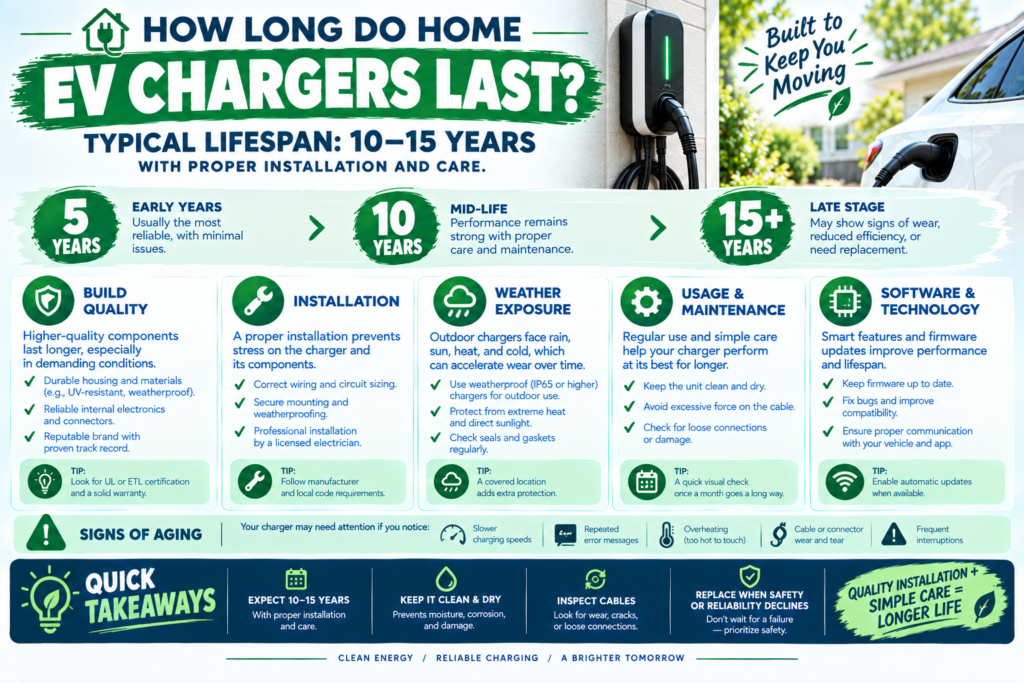
Most home Level 2 EV chargers are built to last 10 years or more under normal residential use, with many manufacturers offering warranties in the 3-5 year range as a baseline confidence indicator rather than an expected failure point. Actual lifespan depends heavily on installation quality, exposure to weather (for outdoor units), and how consistently the unit is used, but premature failure is uncommon with a properly installed, certified charger.
What Affects a Charger’s Lifespan
1. Installation Quality
A charger installed correctly, on a properly sized circuit, by a licensed electrician tends to experience far less stress on its internal components than one installed on an undersized or poorly executed circuit. Issues like a consistently marginal power supply or improper grounding can accelerate wear on internal electronics over time, even if the charger itself is high quality — see our guide on how to find a licensed EV charger installer for why installation quality matters this much.
2. Indoor vs. Outdoor Exposure
Chargers installed in a garage or otherwise protected from direct weather generally experience less cumulative wear than those mounted outdoors and exposed to sun, rain, temperature swings, and humidity over years of use. Outdoor-rated chargers are engineered to handle this, but indoor installations still tend to show less cosmetic and component wear over a long service life.
3. Usage Frequency and Charging Habits
A charger used once daily for years experiences different wear patterns than one used multiple times a day for a multi-EV household, though Level 2 chargers are generally engineered for frequent daily use as their expected baseline, not occasional use.
4. Cable and Connector Wear
The charging cable and connector are typically the components that show wear first, well before the charger’s internal electronics — this is why cable care (avoiding dragging, sharp bends, or crushing) meaningfully extends a charger’s practical usable life, covered in our guide on how to maintain your home EV charger.
5. Climate Extremes
Chargers in regions with extreme heat, cold, or humidity may experience somewhat more component stress over time than those in moderate climates, though quality chargers are designed with a wide operating temperature range specifically to handle this.
Warranty Length as a Lifespan Indicator
Most reputable charger manufacturers offer warranties in the 3-5 year range, which reflects manufacturer confidence in the product’s reliability during that period rather than an expected end-of-life point — similar to how a car’s warranty period doesn’t represent its actual expected lifespan. Chargers commonly continue functioning well beyond their warranty period with normal use and basic maintenance.
Signs Your Charger May Be Nearing the End of Its Useful Life
- Increasingly frequent error codes or connectivity issues that persist despite troubleshooting and firmware updates
- Visible deterioration of the housing, cable, or connector beyond what cleaning and basic care can address
- Noticeably reduced and unexplained charging speed not attributable to your vehicle’s settings, circuit amperage, or temperature — see our guide on why your EV charger might not be charging correctly to rule out simpler causes first
- Repeated need for professional service calls for the same or related recurring issues
Does Charger Lifespan Affect Your Vehicle’s Battery?
No — the charger (EVSE) and your vehicle’s battery are separate systems. Your car’s onboard charging electronics and battery management system control how power is actually delivered to the battery, so a charger nearing the end of its life doesn’t inherently pose a risk to your vehicle’s battery health, provided it continues to function within normal parameters and any malfunction is addressed rather than ignored.
Is It Worth Repairing an Older Charger, or Replacing It?
For most home chargers, replacement is often more practical than repair once a unit is out of warranty and experiencing real issues, since:
- Charger technology and smart features have generally improved meaningfully over a multi-year period, making a replacement often a genuine upgrade rather than just a fix
- Repair options for consumer-grade EVSE units are limited compared to, say, appliance repair, since many components aren’t designed to be individually serviced
- The cost difference between diagnostic/repair labor and a new unit is often smaller than expected, especially when factoring in that your circuit and wiring — the more expensive part of the original installation — typically don’t need to be redone for a straightforward swap
Key Takeaways
- Home EV chargers typically last 10+ years with proper installation and normal use, despite shorter standard warranty periods.
- Installation quality, weather exposure, and cable care are the biggest factors affecting real-world lifespan.
- The charging cable and connector typically show wear before the charger’s internal electronics do.
- Persistent errors, visible deterioration, or unexplained reduced performance are signs to consider replacement rather than continued troubleshooting.
Frequently Asked Questions
Does a longer warranty always mean a longer-lasting charger? Not necessarily — warranty length reflects manufacturer confidence and marketing positioning as much as actual expected lifespan. A charger with a shorter warranty from a reputable, certified brand can still last many years beyond that period with proper care.
Can I extend my charger’s lifespan with anything beyond basic maintenance? Proper installation from the start and consistent cable care are the two biggest factors within your control — beyond that, there’s little additional maintenance that meaningfully extends lifespan further, since these are largely passive electronic devices with few user-serviceable components.
Is it worth replacing a working but older charger just to get newer features? This comes down to personal preference and whether new features (like power sharing, improved app functionality, or higher amperage) would genuinely benefit your situation — a functioning older charger doesn’t need replacement purely due to age.